l Prashan Premaratne
l Jucheng Yang
l Chuanlei Zhang
|
|
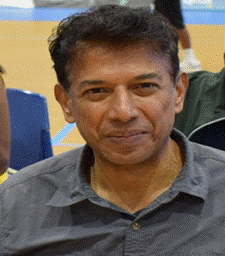
Prashan Premaratne PhD & Senior Lecturer, Senior Member IEEE Australian TEQSA Expert in Artificial Intelligence. School of Electrical, Computer & Telecommunications Engineering University of Wollongong, New South Wales, Australia |
|
|
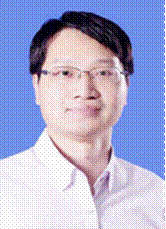
Jucheng Yang Prof. & Ph.D Guangxi Academy of Artificial Intelligence, Guilin University of Electronic and Technology, China |
|
|
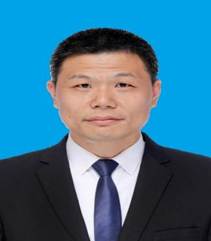
Chuanlei Zhang PhD & Professor School of Artificial Intelligence Tianjin University of Science and Technology, Tianjin, China |



Artificial Intelligence Assisted Sign Language Recognition
Prashan Premaratne, PhD & Senior Lecturer
Senior Member IEEE, Australian TEQSA Expert in Artificial Intelligence
School of Electrical, Computer & Telecommunications Engineering
University of Wollongong, New South Wales, Australia
 Abstract: Artificial
Intelligence today has encroached into our lives without our consent nor
acknowledgement. It is quite hard to even realise whether we have been tracked
online such as on YouTube, online shopping or movement inside our own home
using AI systems. With the development of bipedal robots very much available in
China and in the USA, many believe that there won’t be a future without AI.
Around the world, many businesses utilise AI assistance in replacing many
employments related to software development, handling call centres and even
replacing receptionists. Even medical expertise is somewhat replaced by AI
assistance. Yet, sign language recognition has appeared to be nowhere being
successfully attempted by AI. This presentation will highlight the usefulness
of sign language and its recognition using computer vision that would
revolutionize the world. Yet, the complexity of many sign languages of the world
has thrusted AI into unsurmountable challenges at present yet, research would
still strive to develop mechanisms to accurately decipher this sign languages
and demonstrate that AI can truly outsmart humans. There have not been significant
developments in this area, but the author would present the accomplishments of
his team over the past two decades to highlight the significant challenges
still needs to be addressed with the assistance of AI to change the world.
Abstract: Artificial
Intelligence today has encroached into our lives without our consent nor
acknowledgement. It is quite hard to even realise whether we have been tracked
online such as on YouTube, online shopping or movement inside our own home
using AI systems. With the development of bipedal robots very much available in
China and in the USA, many believe that there won’t be a future without AI.
Around the world, many businesses utilise AI assistance in replacing many
employments related to software development, handling call centres and even
replacing receptionists. Even medical expertise is somewhat replaced by AI
assistance. Yet, sign language recognition has appeared to be nowhere being
successfully attempted by AI. This presentation will highlight the usefulness
of sign language and its recognition using computer vision that would
revolutionize the world. Yet, the complexity of many sign languages of the world
has thrusted AI into unsurmountable challenges at present yet, research would
still strive to develop mechanisms to accurately decipher this sign languages
and demonstrate that AI can truly outsmart humans. There have not been significant
developments in this area, but the author would present the accomplishments of
his team over the past two decades to highlight the significant challenges
still needs to be addressed with the assistance of AI to change the world.
Brief Bio-data: Prashan was born in Sri Lanka in 1972 and was awarded an Australian government scholarship under John Crawford Scholarship Scheme (JCSS) to pursue undergraduate studies at the University of Melbourne, Australia in 1994. In 2001, he graduated with PhD from the National University of Singapore in the field of image and signal processing. Since 2003, he has been an academic at the University of Wollongong, Australia and is currently a Senior Lecturer at the School of Electrical, Computer and Telecommunications Engineering. In 2005, he developed a computer vision-based system to control any computer interface which resulted in worldwide acclaim which was called ‘The Wave Controller’, which utilised concepts that would be used in sign language recognition. Dr. Premaratne is a Senior Member of IEEE and is the author of the book “Human Computer Interaction Using Hand Gestures” published by Springer International in 2014. Dr. Premaratne has been a founding member of the International Conference on Intelligent Computing (ICIC). He has been the program co-chair, tutorial chair, plenary speech chair and International Liaison Chair over the year during the past 21 years and has received Outstanding Leadership Award for his contribution to ICIC in 2015. Dr. Premaratne has published over one hundred publications and is also a reviewer for major International Journals. He has been Guest Editor for many technological Journals over the years and was also an Assistant Editor of Springer Journal of Cognitive Science in the past.
DeepSeek Artificial Intelligence Large Model and Applications
Juchen Yang, Prof. & Ph.D,
Guangxi Academy of Artificial Intelligence, Guilin University of Electronic and Technology, China
 Abstract: Artificial
Intelligence (AI) has experienced exponential growth over the past few decades,
evolving from simple rule-based systems to highly sophisticated models capable
of performing complex tasks. Large artificial intelligence (AI) models,
particularly large language models (LLMs), have become a driving force behind
the latest advancements in AI. These models are distinguished by their enormous
scale and ability to process vast amounts of data, enabling them to tackle
complex tasks once thought to require human intelligence. Large models have
emerged as the cornerstone of contemporary AI, powering a wide range of
applications across various industries, such as healthcare, education, and entertainment.
In this presentation, we will explore the transformative power of large AI
models, their applications across different sectors, and the future trajectory
of AI development. Our discussion will begin with the evolution of artificial
intelligence, followed by the current third generation of AI— the powerful synergy
between knowledge and data, and finally, our core topic—the rise of large
language models, characterized by unprecedented scale and capability. The
presentation will provide a landscape of leading global and domestic models,
including the cost-effective, high-performance DeepSeek series, and then delve
into their revolutionary impact across industries, from automated customer
service and intelligent healthcare to personalized education and beyond. We
will conclude by looking ahead at future trends toward more robust, scalable,
and trustworthy AI, framing large models as the cornerstone of next-generation
technological innovation.
Abstract: Artificial
Intelligence (AI) has experienced exponential growth over the past few decades,
evolving from simple rule-based systems to highly sophisticated models capable
of performing complex tasks. Large artificial intelligence (AI) models,
particularly large language models (LLMs), have become a driving force behind
the latest advancements in AI. These models are distinguished by their enormous
scale and ability to process vast amounts of data, enabling them to tackle
complex tasks once thought to require human intelligence. Large models have
emerged as the cornerstone of contemporary AI, powering a wide range of
applications across various industries, such as healthcare, education, and entertainment.
In this presentation, we will explore the transformative power of large AI
models, their applications across different sectors, and the future trajectory
of AI development. Our discussion will begin with the evolution of artificial
intelligence, followed by the current third generation of AI— the powerful synergy
between knowledge and data, and finally, our core topic—the rise of large
language models, characterized by unprecedented scale and capability. The
presentation will provide a landscape of leading global and domestic models,
including the cost-effective, high-performance DeepSeek series, and then delve
into their revolutionary impact across industries, from automated customer
service and intelligent healthcare to personalized education and beyond. We
will conclude by looking ahead at future trends toward more robust, scalable,
and trustworthy AI, framing large models as the cornerstone of next-generation
technological innovation.
Bio-Sketch: Jucheng Yang is a professor with the School of Computer Science and Information Security, Guilin University of Electronic and Technology, and is the dean of Guangxi Academy of Artificial Intelligence. His research interests include image processing and pattern recognition, artificial intelligence, computer science, and smart agriculture. He was the editor or reviewer for international journals, such as IEEE Transactions on Information Forensics and Security and IEEE Transactions on Industrial Informatics. He has published more than 200 papers in authoritative international academic conferences and journals.
Robust Semantic Segmentation for Aerial Images
Chuanlei Zhang, PhD & Professor
School of Artificial Intelligence
Tianjin University of Science and Technology, Tianjin, China
Abstract: Aerial and remote sensing imagery is critical for earth observation tasks such as urban planning, disaster response, and environmental monitoring. However, deep learning models, despite their high accuracy, are vulnerable to adversarial attacks, including adversarial patches, data poisoning, and backdoor triggers, which threaten the reliability of these systems in safety-critical applications. This report synthesizes four complementary research works addressing these challenges through robust architectural innovations. To counter physically realizable adversarial patches, we introduce the Robust Feature Extraction Network (RFENet). It integrates a Limited Receptive Field Mechanism (LRFM) to constrain spatial feature aggregation, a Spatial Semantic Enhancement Module (SSEM) to refine contextual relationships, a Boundary Feature Perception Module (BFPM) to model object edges, and a Global Correlation Encoder Module (GCEM) to capture long-range dependencies. To address backdoor vulnerabilities, we develop the Robust Feature-Guided Generative Adversarial Network (RFGAN). It uses a Robust Global Feature Extractor (RobGF) and Robust Edge Feature Extractor (RobEF) to prioritize salient visual cues, guiding a generator-discriminator pair to synthesize benign samples. This framework achieves 95% accuracy on clean data and 92% resilience against triggered inputs. To resolve inherent limitations in CNN-based segmentation (e.g., feature information loss, clutter interference), we design the Hidden Feature-Guided Semantic Segmentation Network (HFGNet). HFGNet achieves 89% mIoU on the ISPRS dataset with 20% fewer parameters than competitors. This report consolidates advances in robust aerial image semantic segmentation, demonstrating that architectural innovations can effectively counter adversarial threats and foresee the future works in this field.
Bio-Sketch: Chuanlei Zhang was born in October 1973. He received the B.S. degree from the Shanxi Mining College, Taiyuan, China, in 1995, and the M.S. and Ph.D. degrees from the China University of Mining and Technology (Beijing), Beijing, China, in 1998 and 2006, respectively, all in electrical engineering. From 2000 to 2010, he was a Software Manager and a Senior Software Engineer with Motorola, Beijing. Since September 2010, he has been holding a post-doctoral position at the Communication and Signal Processing Applications Laboratory (CASPAL), Department of Electrical and Computer Engineering, Ryerson University, Toronto, ON, Canada.Since October 2013, he has been with the College of Artificial Intelligence, Tianjin University of Science and Technology, Tianjin, China, where he is currently a Full Professor. His research interests include pattern recognition, data mining, computational intelligence, and applications in bioinformatics. He published more than 80 papers and was responsible for more than 30 research projects. Dr. Zhang has served many roles in the international conferences, including Program Committee Co-Chair of the 21st International Conference on Intelligent Computing (ICIC2025), Program Committee Co-Chair of the 20th and general co-chair of IEEE 6th International Conference on Signal Processing and Machine Learning. He has been reviewers and Guest Editor for many technological Journals over the years.